Many people believe investing is only for individuals with high salaries or large savings. Because of this belief, they postpone their financial journey, thinking they will start investing once they earn more money.
But the reality is very different.
Most successful investors did not begin with huge amounts of money. They started small and stayed consistent for many years. The secret to building wealth is not always the size of your investment — it’s the discipline to invest regularly.
In India today, even ₹1,000 per month can be enough to begin your journey toward long-term financial growth. When small investments are combined with patience and smart decisions, they can grow into surprisingly large amounts over time.
This guide explains how someone starting with just ₹1,000 per month can gradually work toward building a portfolio worth ₹1 crore.
My Experience
When I first started learning about investing, I believed I needed a large amount of money to begin. But after researching and observing successful investors, I realized something important: consistency matters far more than the starting amount.
Why Starting Early Matters More Than Starting Big
When beginners think about investing, they usually focus on how much money they can invest. However, experienced investors understand that the most powerful factor in wealth creation is time.
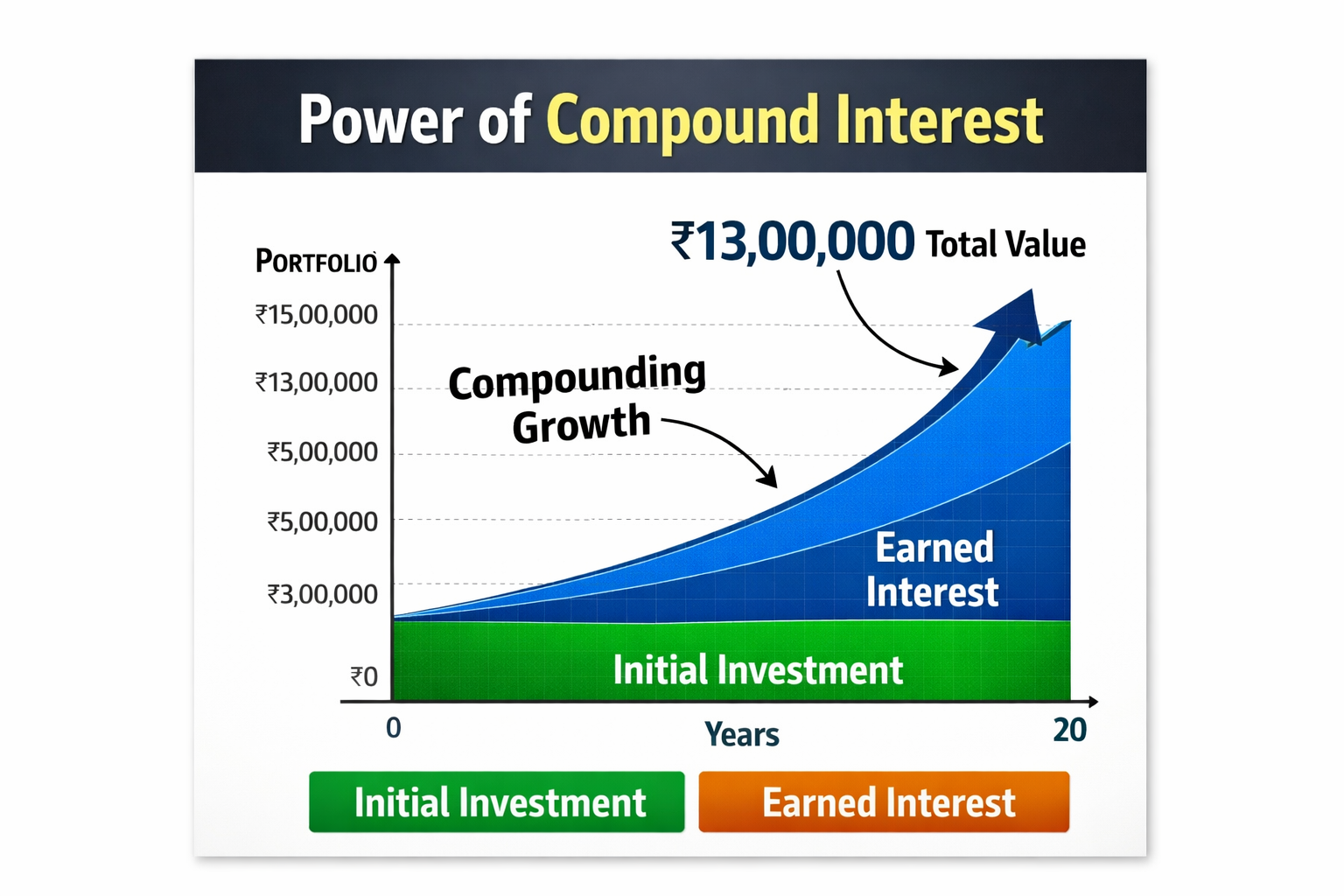
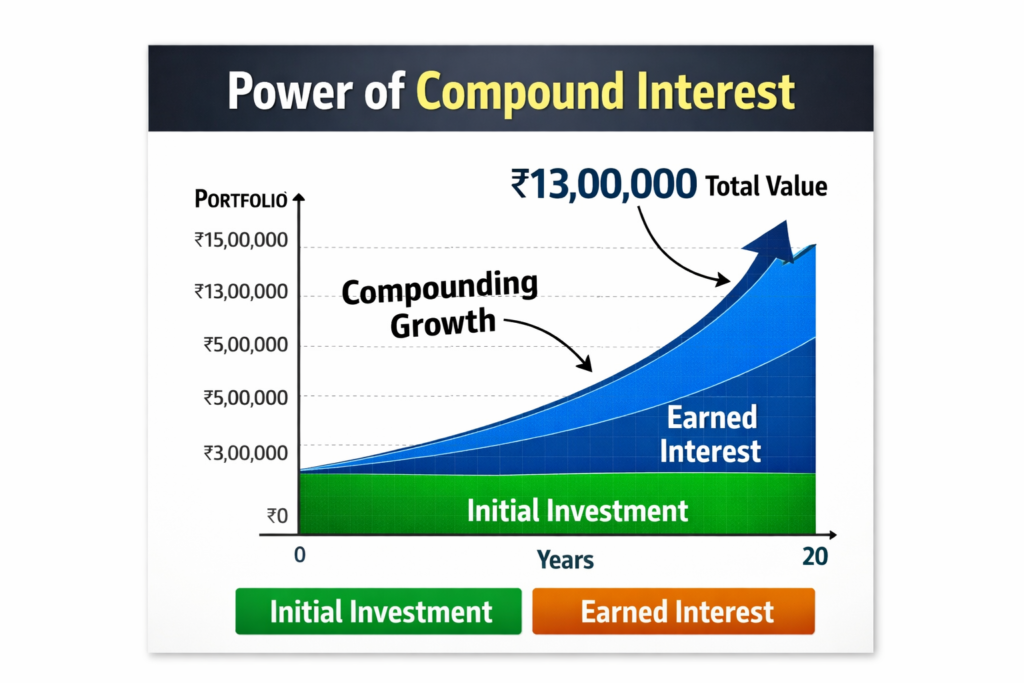
Money grows faster when it stays invested for long periods because of Compound Interest.
Compounding means your investment generates returns, and those returns begin generating their own returns as well.
At first, the growth may appear slow. But over time, the process accelerates. This is why people who start investing early often build larger portfolios compared to those who start later with bigger investments.
Think of it like planting a tree. In the beginning it grows slowly, but as the roots become stronger, the growth becomes faster and more visible.
My First ₹1,000 Investment (A Realistic Example)
When I first started learning about investing, I didn’t have a lot of extra money. Like many beginners, I assumed investing required thousands of rupees.
Instead of waiting for the “perfect time,” I decided to start small. I began investing ₹1,000 every month.
At first, the changes in my portfolio were small. Some months the market went up, and other months it dropped. But something interesting happened over time — the habit of investing became easier.
After several months, I realized the most important thing wasn’t the amount I invested. It was the consistency.
That small decision helped me build confidence and gradually increase my investments.
Many beginners experience the same thing: starting small removes fear and builds a strong long-term investing habit.
Step 1: Build the Habit of Investing
Before thinking about becoming wealthy, the first goal should be building a consistent investing habit.
Many people earn money but never develop the habit of saving and investing regularly. Without this habit, even a high income does not guarantee financial security.
When you invest every month — even a small amount — you train yourself to treat investing as a normal financial activity.
Over time, this simple habit becomes one of the most powerful tools for building wealth.
Like many beginners, I also felt nervous when I invested for the first time. But once I started small and stayed consistent, the process became much easier.
Step 2: Use SIP for Consistent Investing
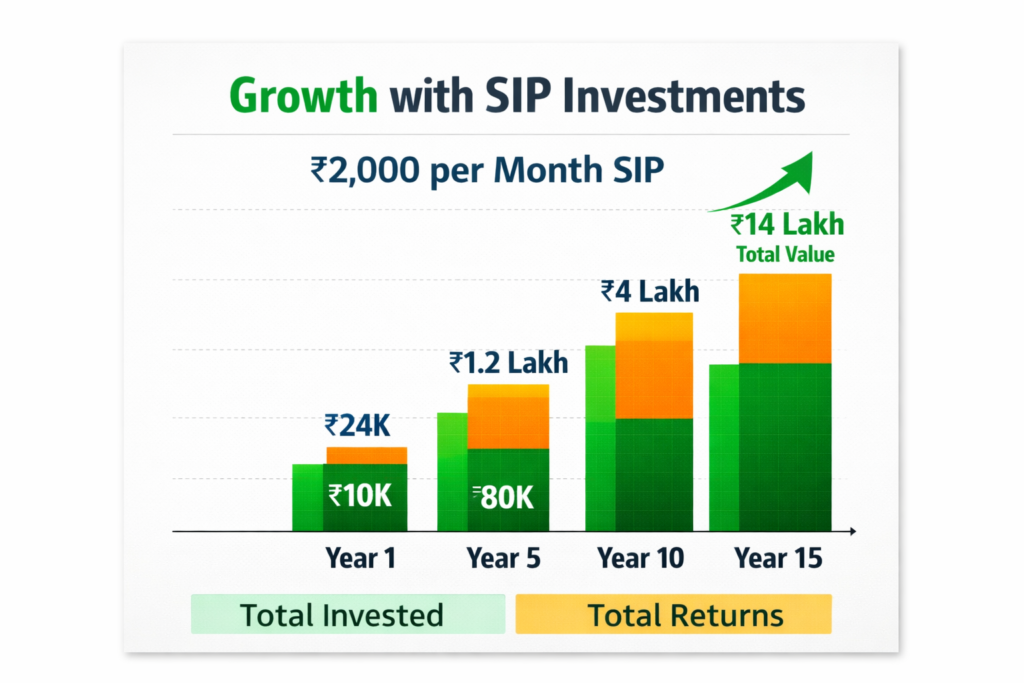
One of the easiest ways beginners start investing is through a Systematic Investment Plan (SIP).
A SIP allows investors to automatically invest a fixed amount into a mutual fund every month.
This approach simplifies investing and removes the pressure of trying to predict market movements.
Many platforms make this process easy for beginners. Popular platforms like Zerodha, Groww, and Upstox allow users to start SIP investments online within minutes.
The biggest advantage of SIP investing is consistency. Your money is invested every month, regardless of market conditions.
Step 3: Focus on Long-Term Growth Investments
If your goal is building a ₹1 crore portfolio, long-term growth should be your primary focus.
Equity investments such as mutual funds and index funds have historically provided higher returns compared to traditional savings options.
While markets can fluctuate in the short term, long-term investors usually benefit by staying invested.
A simple beginner portfolio might include:
• Equity mutual funds for growth
• Index funds for market exposure
• Hybrid funds for balanced risk
Diversification helps reduce risk while allowing your portfolio to grow steadily over time.
Example: How Small Investments Can Grow
| Monthly Investment | Years | Total Invested | Possible Growth* |
| ₹1,000 | 10 years | ₹1,20,000 | ₹2,00,000+ |
| ₹2,000 | 15 years | ₹3,60,000 | ₹7,00,000+ |
| ₹5,000 | 20 years | ₹12,00,000 | ₹40,00,000+ |
*Example based on long-term investment averages and the power of Compound Interest.
Step 4: Increase Investments Over Time
Starting with ₹1,000 is just the beginning. As your income grows, your investments should grow as well.
Example:
Year 1–2: ₹1,000 per month
Year 3–5: ₹2,000–₹3,000 per month
Year 6–10: ₹5,000 or more per month
This strategy is known as step-up investing.
Even small increases in your monthly investment can significantly accelerate portfolio growth over time.
Step 5: Avoid Common Beginner Mistakes
Many beginners lose motivation because they expect quick profits.
Investing is a long-term process that requires patience and discipline.
Common mistakes to avoid include:
Checking investments every day
Daily market fluctuations are normal and constant monitoring can create unnecessary stress.
Stopping SIP during market drops
Market corrections are natural and often beneficial for long-term investors.
Following random financial advice
Not every tip online is reliable. Always research before making investment decisions.
Expecting instant results
Wealth creation takes time and consistency.

Step 6: Stay Invested for the Long Term
One of the biggest secrets behind large investment portfolios is patience.
If someone invests consistently and gradually increases their investments, the portfolio can grow significantly over 20–25 years.
Over time, compounding becomes more powerful and portfolio growth becomes more noticeable.
Many successful investors simply stayed invested and allowed time to do the work.
Frequently Asked Questions
Can I really start investing with ₹1,000?
Yes. Many mutual funds allow SIP investments starting from ₹500 or ₹1,000, making investing accessible for beginners.
What is the best platform to start investing?
Popular platforms like Zerodha, Groww, and Upstox provide beginner-friendly apps for investing.
How long does it take to build a large portfolio?
Building a large portfolio usually takes time. Most investors see significant growth after 10–20 years of consistent investing.
Simple Action Plan for Beginners
If you want to start today, follow these steps:
- Open a demat or investment account
- Start a ₹1,000 SIP in a mutual fund
- Increase your investment as your income grows
- Stay consistent and avoid panic during market fluctuations
Small steps taken today can create strong financial stability in the future.
Conclusion
Building a ₹1 crore portfolio may seem difficult at first, but the journey often begins with small and consistent investments.
Even a monthly investment of ₹1,000 can grow over time when combined with patience and the power of Compound Interest.
Instead of waiting for the perfect moment, start investing with whatever amount you can today. With discipline, consistency, and a long-term mindset, small steps today can lead to strong financial growth in the future.